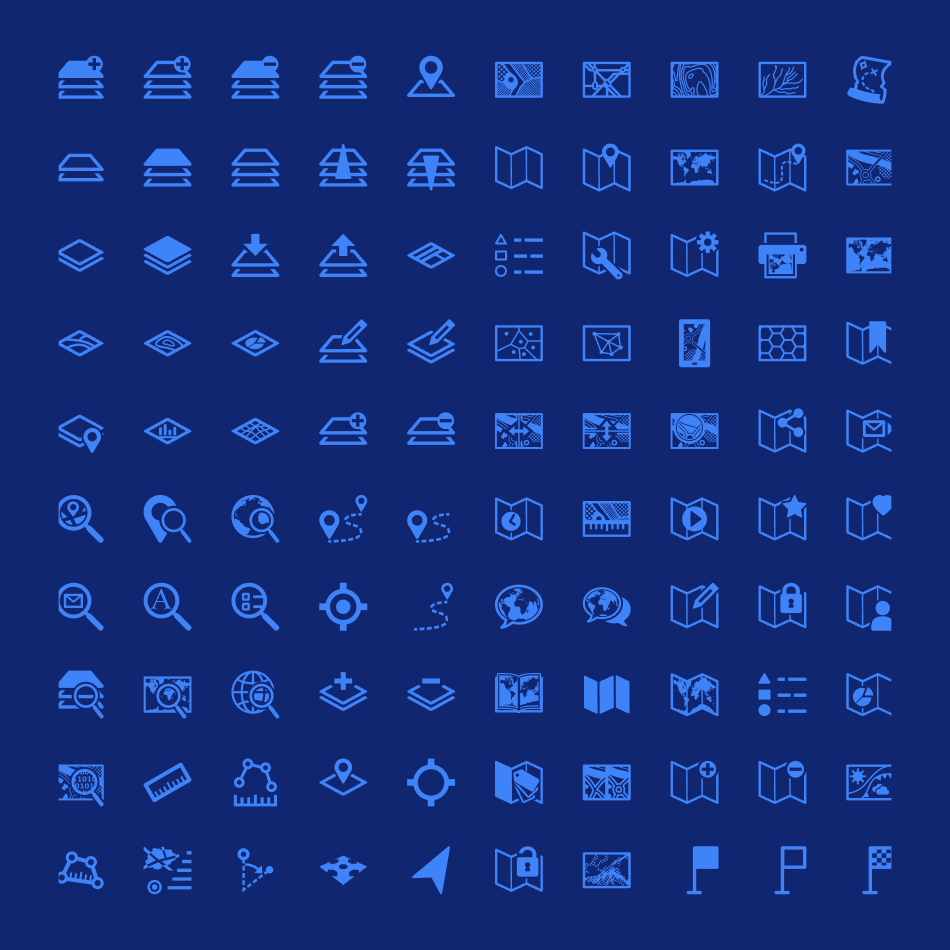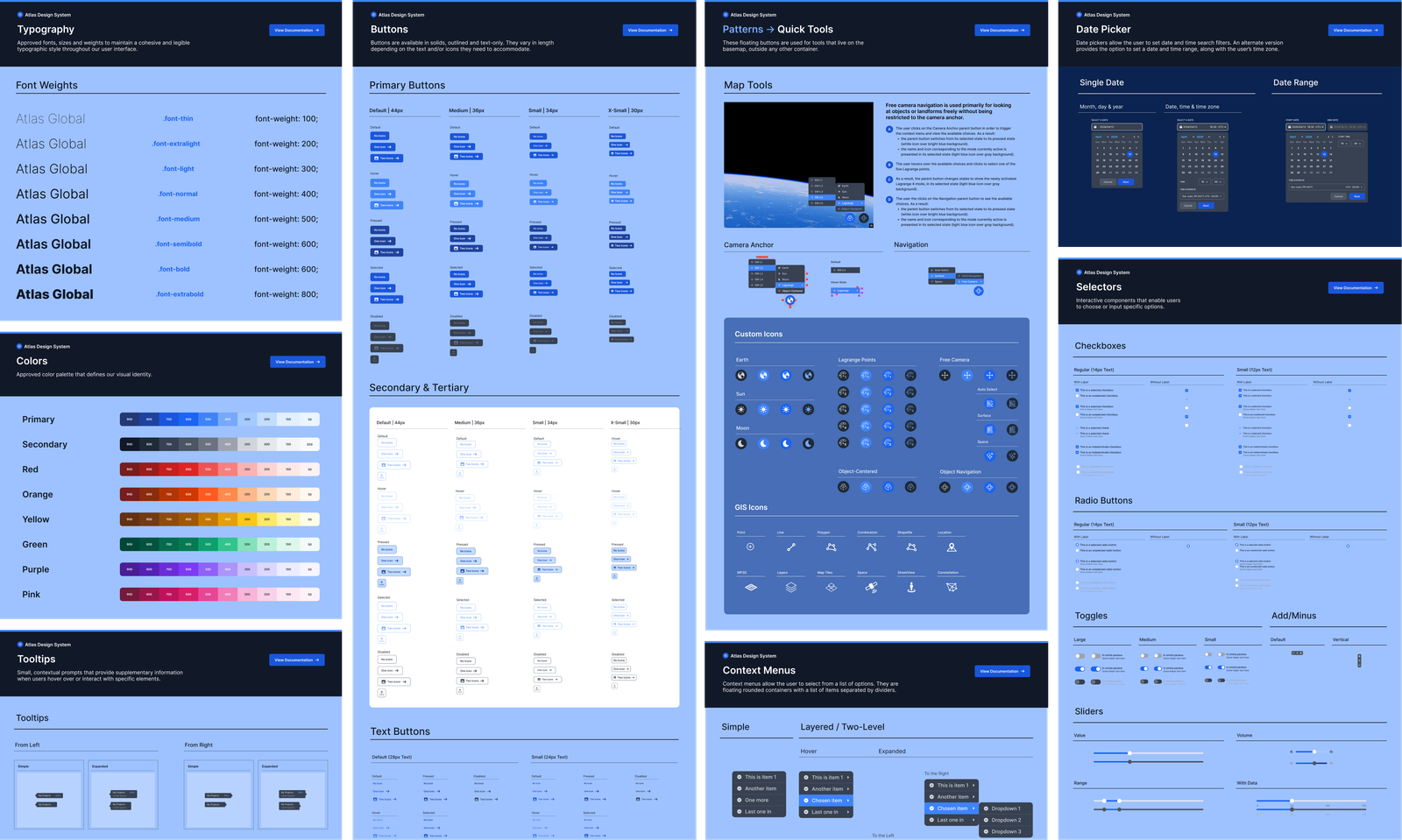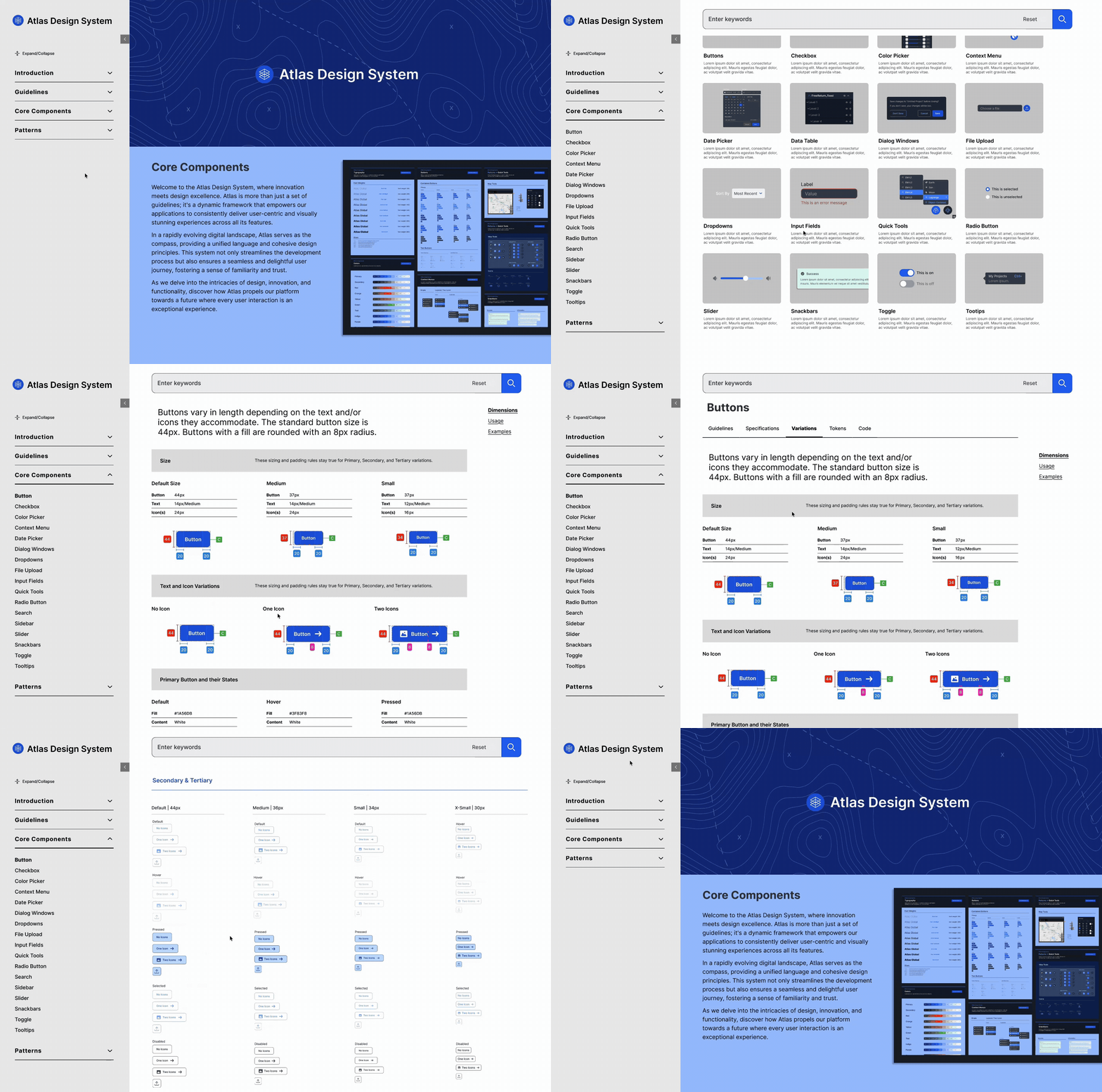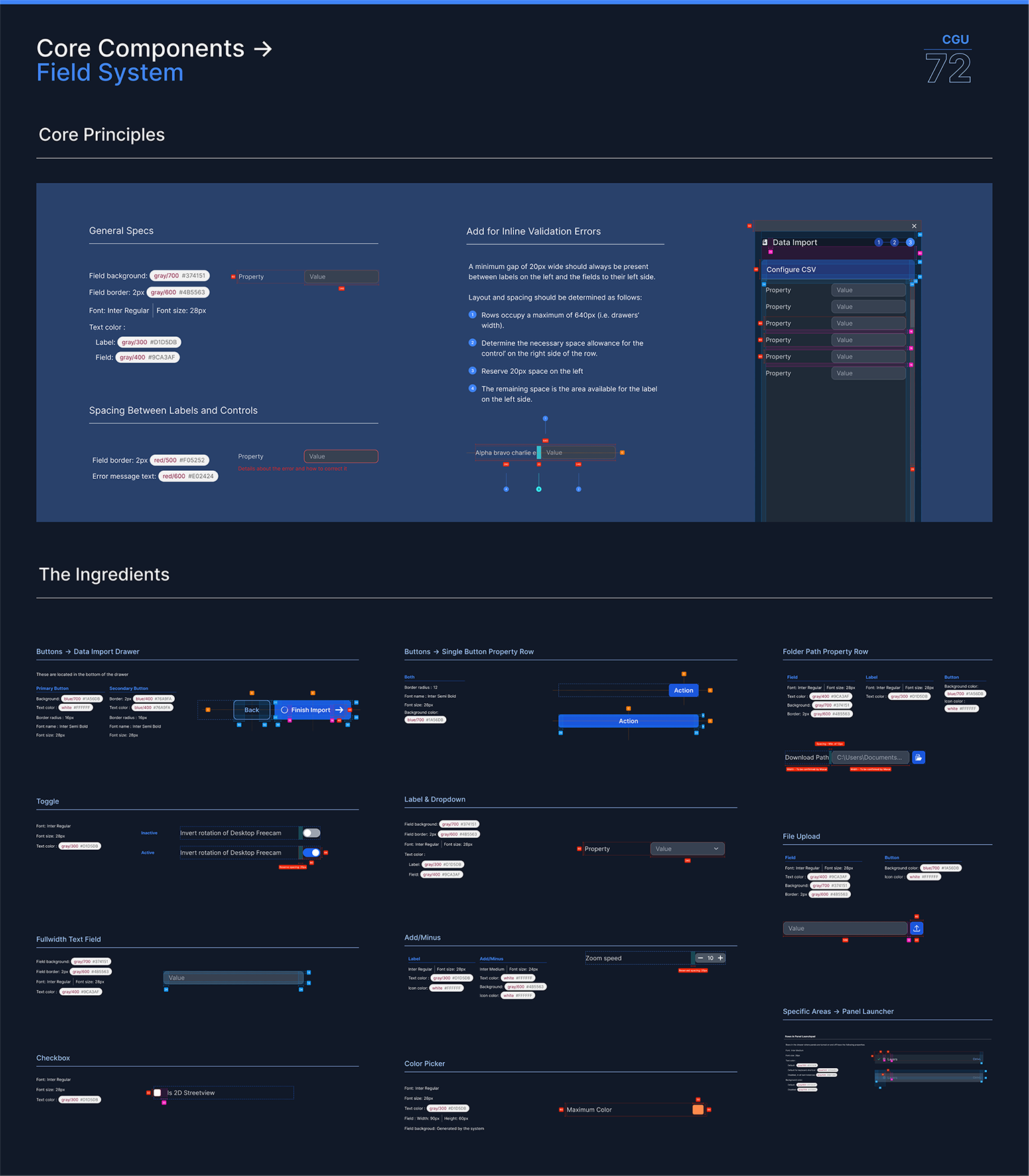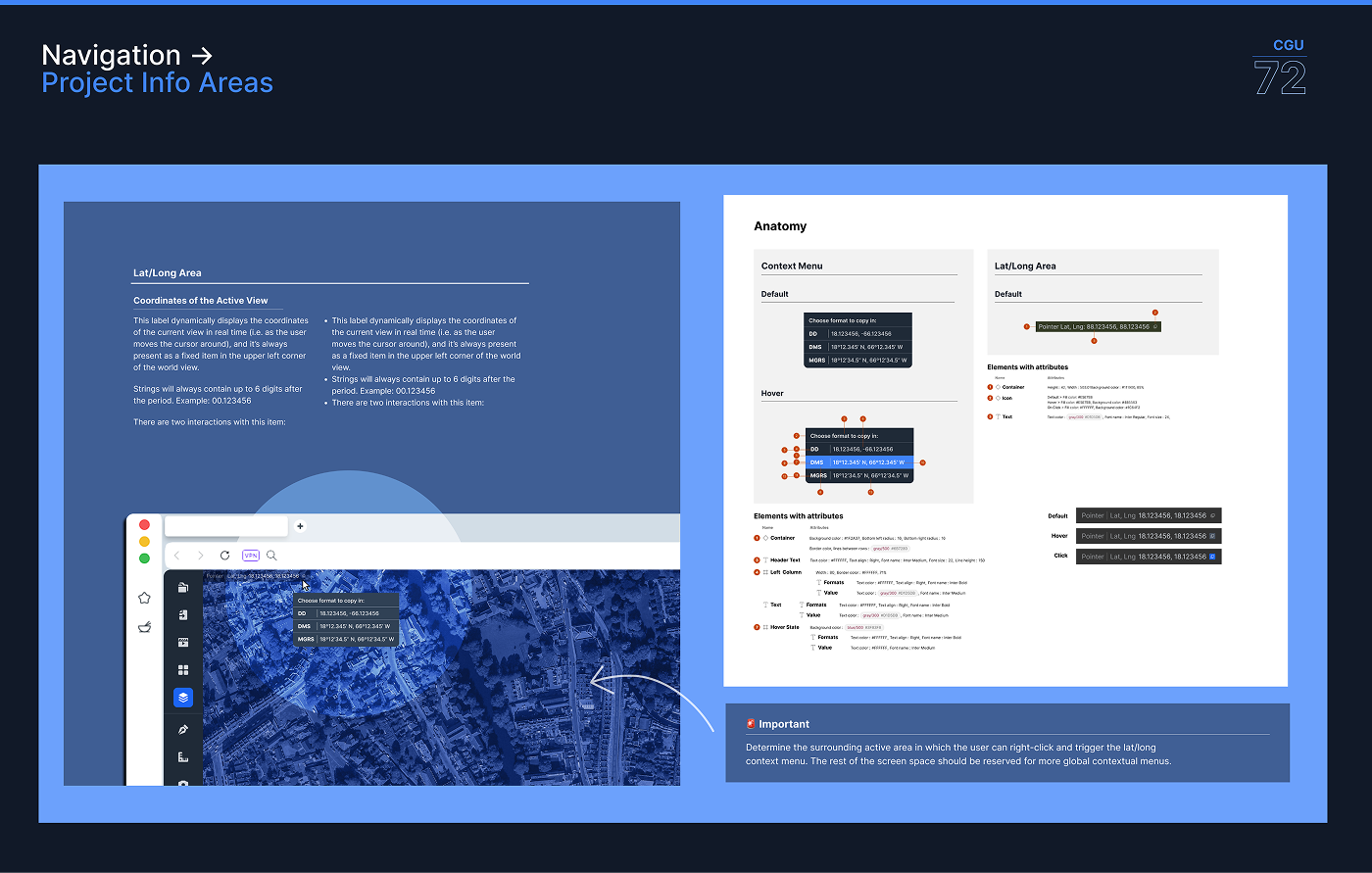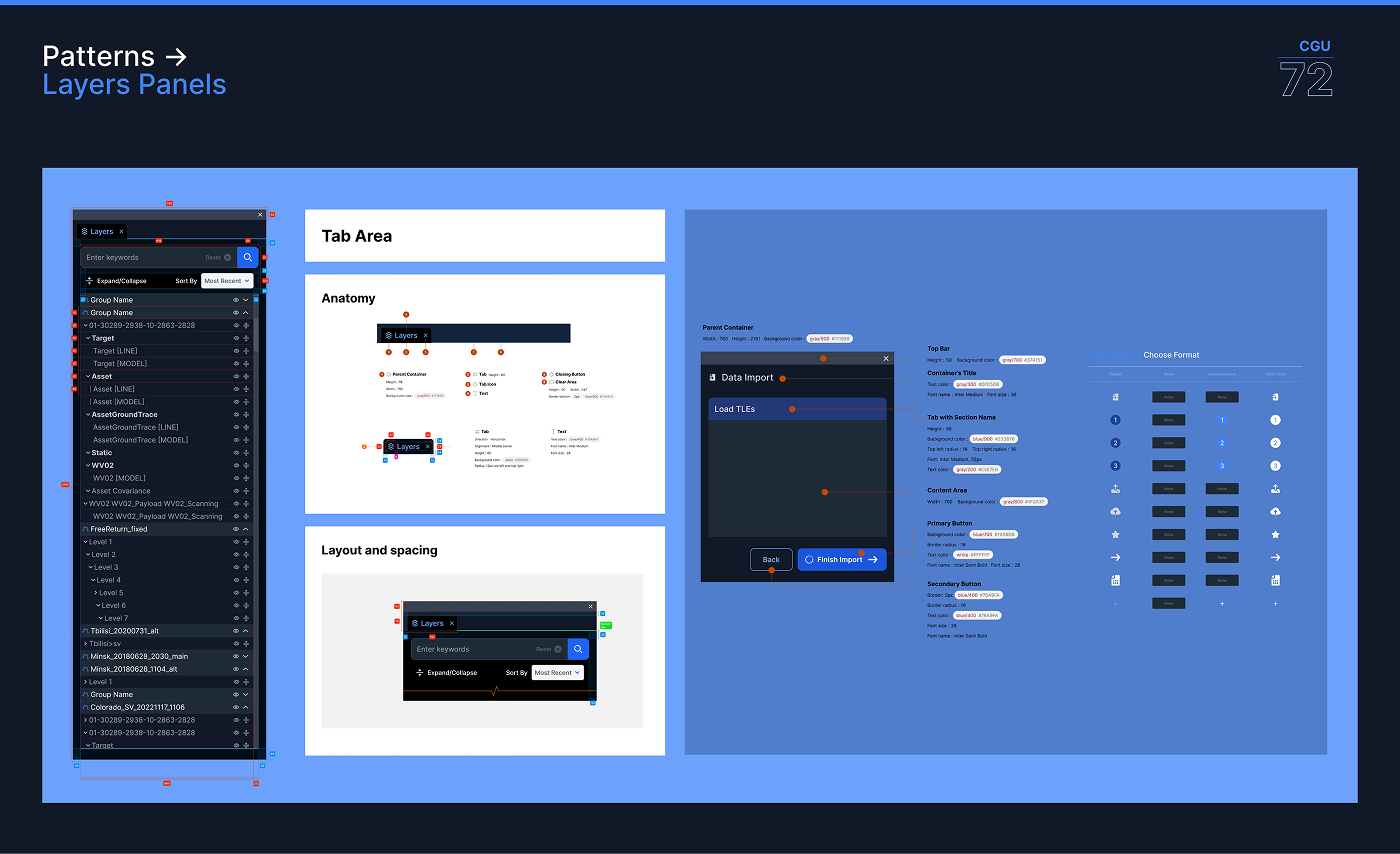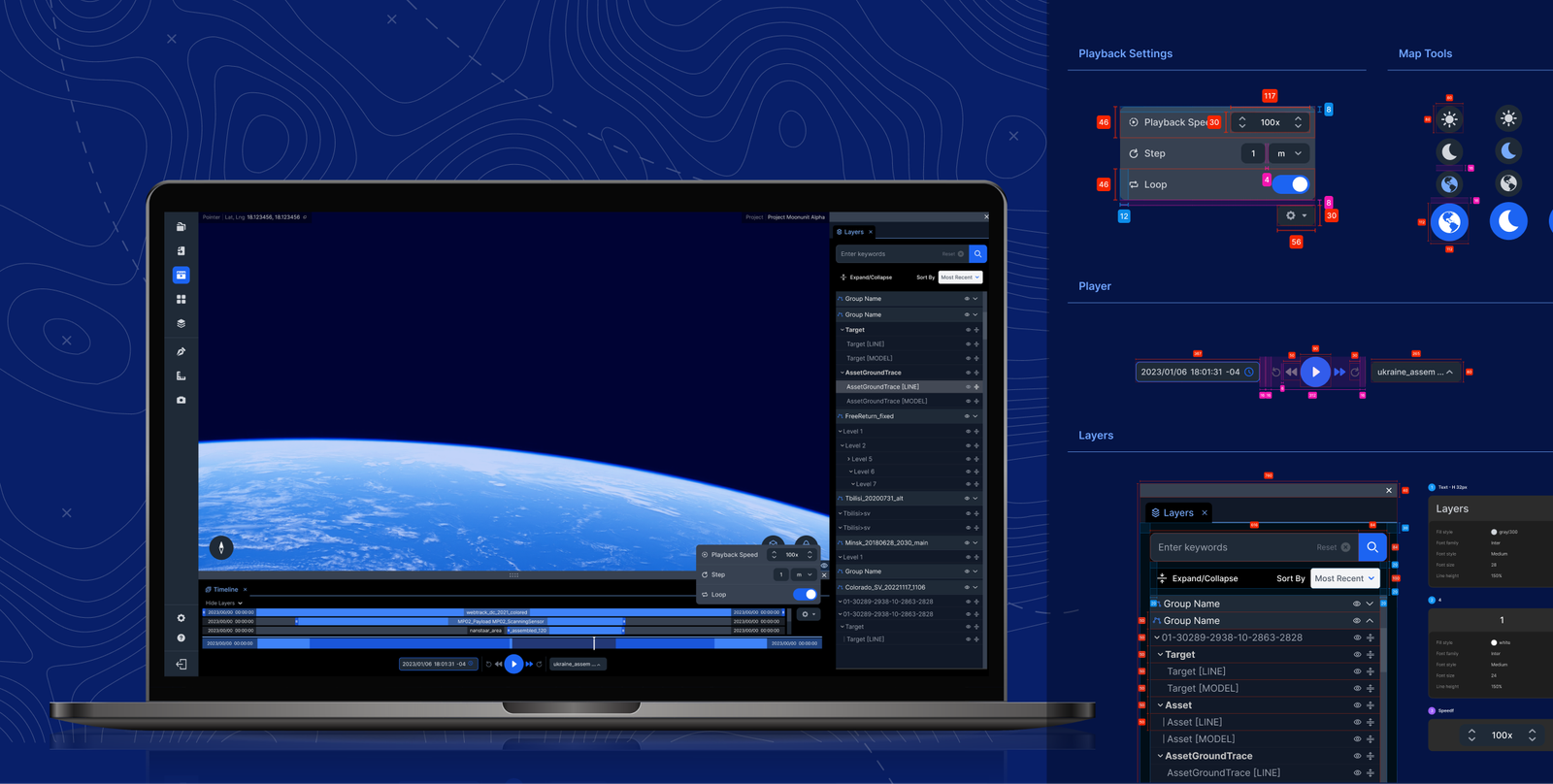
A design system is only as strong as its ability to scale without fracturing. The Atlas Design System was built for a complex geospatial mapping application, which meant that generic component libraries weren't an option. The product's unique interaction model demanded a purpose-built foundation. The system covers the full spectrum from core tokens –typography scales, a structured color palette, spacing rules– to domain-specific components such as custom GIS and camera navigation icon sets, responsive layers panel with hierarchical data management, and map tool controls designed specifically for 2D and 3D spatial environments.
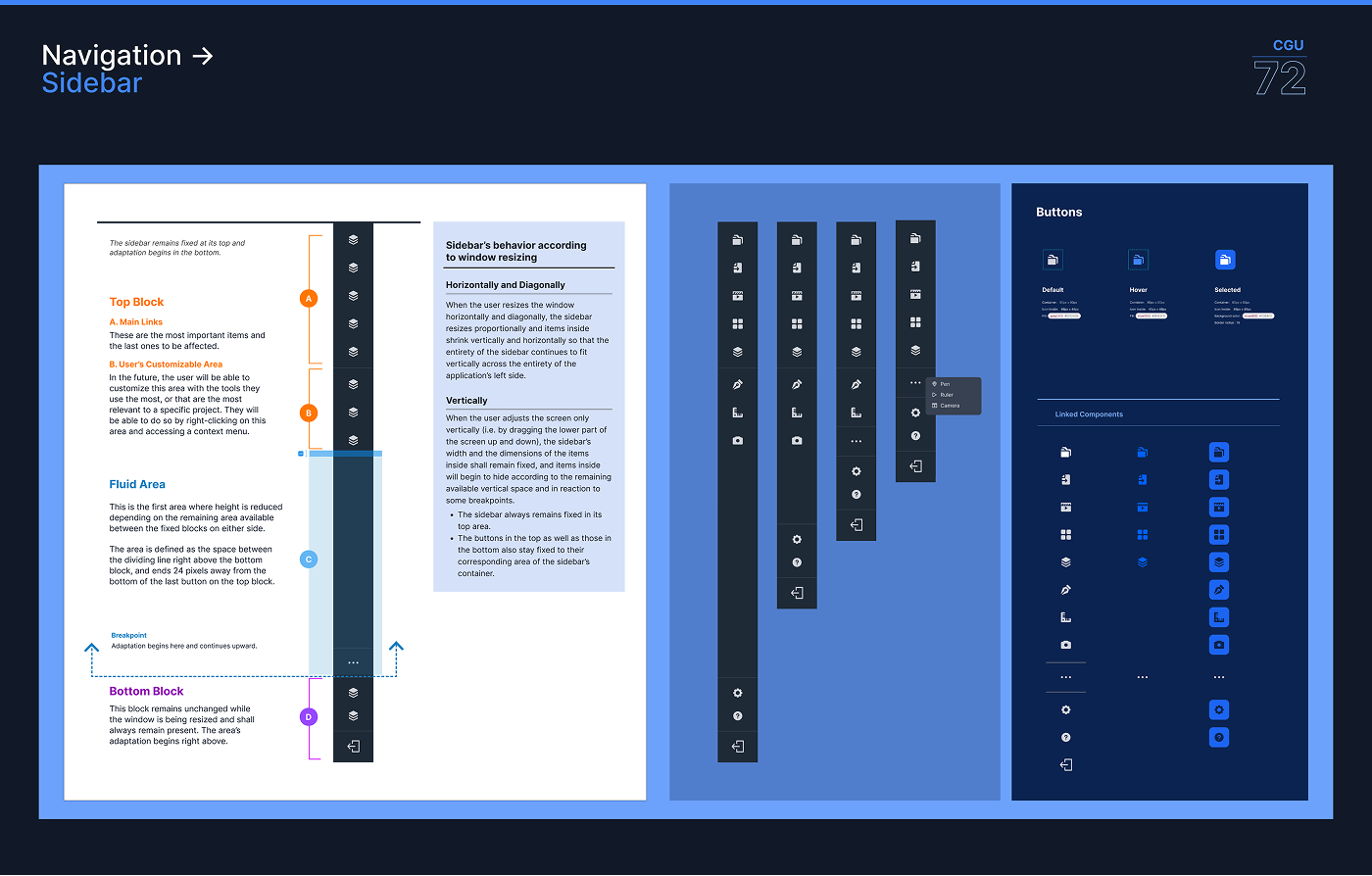
Every component is documented with anatomy diagrams, element-level attribute specs, and behavioral guidelines for edge cases, including how the sidebar adapts across horizontal, diagonal, and vertical resizing. The result is a system that gives product teams the building blocks to move fast without losing coherence, and that speaks the language of the application it was built to serve.
Just as important as the artifact was how it was made. Rather than the usual "hand off the specs and see you back when it's build," I remained embedded with the engineering team through the entire build, a level of collaboration that was far from typical at the company. In daily standups we walked through specifications in detail and resolved open questions on the spot instead of parking them in a backlog. And as engineers implemented components and patterns,I reviewed and approved their merge requests myself — reading the pull requests and checking each built component against its intended design, attribute by attribute, before the engineering lead merged to production. Being trusted with that much say over what actually shipped, rather than dropping out at the spec stage, is rare for a designer — and it's the surest way I know to keep what gets built faithful to what was designed: a system that doesn't just describe the product, but stays accountable to the code that implements it.